Adderall 30 mg
Price range: $75.00 through $325.00
Adderall 30 mg is a prescription stimulant medication containing mixed amphetamine salts (75% dextroamphetamine and 25% levoamphetamine). It is primarily prescribed for Attention Deficit Hyperactivity Disorder (ADHD) and sometimes narcolepsy.
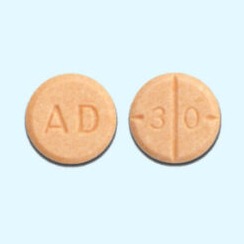
- Form: Usually comes as orange round tablets (brand name) or various colors/shapes for generics (e.g., orange oblong, blue capsules for XR version). The “30 mg” refers to the immediate-release (IR) strength.
- Effects: As a central nervous system stimulant, it increases dopamine and norepinephrine levels, leading to improved focus, attention, wakefulness, and reduced impulsivity in patients with ADHD. At higher or non-prescribed doses, it can produce euphoria, increased energy, confidence, and appetite suppression.
- Duration: Immediate-release (IR) 30 mg typically lasts 4–6 hours. Extended-release (XR) versions last 10–12 hours.
Adderall 30mg Pharmacological Profile USA: A Deep Dive into Stimulant Science
Understanding the Adderall 30mg Pharmacological Profile USA requires a deep dive into the complex world of central nervous system stimulants. For decades, this specific formulation has served as a cornerstone in the management of Attention Deficit Hyperactivity Disorder (ADHD) and narcolepsy. However, beyond the common clinical applications lies a sophisticated chemical architecture that differentiates it from other sympathomimetic agents. By exploring the precise ratio of amphetamine salts, we can better understand how it modulates human cognition. Therefore, this guide provides the high-authority technical insights necessary to understand the “orange footballs” and their impact on neurobiology.
The clinical landscape for stimulants is evolving rapidly across the globe. From the busy medical hubs in New York to the regulatory environments of London and Sydney, the demand for precise pharmacological data is higher than ever. Consequently, medical professionals and researchers must look beyond the surface-level descriptions found on generic health blogs. If you are seeking foundational information on neuro-enhancement, visiting the Legal Psychedelic Hub offers a broader perspective on cognitive tools. Moreover, understanding the pharmacokinetic profile of the 30mg dose is essential for maximizing therapeutic efficacy while minimizing adverse metabolic responses. Best psychedelic therapy explained
The Neurobiology of Adderall 30mg
When we examine the Adderall 30mg Pharmacological Profile USA, we must first address its unique composition. Unlike pure dextroamphetamine, Adderall consists of a 3:1 ratio of d-amphetamine to l-amphetamine salts. This specific blend provides a nuanced effect on both the central and peripheral nervous systems. The dextro-isomer is highly effective at crossing the blood-brain barrier to target dopamine pathways. Meanwhile, the levo-isomer provides a more pronounced effect on norepinephrine, which can assist with physical alertness and sustained attention. Consequently, the synergy of these four salts creates the comprehensive profile that practitioners rely on today.
Furthermore, the 30mg dosage is often considered the upper tier of immediate-release titration. At this level, the concentration of amphetamine in the plasma reaches its peak relatively quickly, typically within three hours. In regions like the UAE (particularly Dubai) and Australia, where stimulant regulations are exceptionally stringent, this dosage is monitored with extreme precision. Therefore, understanding the molecular transition from ingestion to receptor binding is vital for any high-intent researcher or clinician. magic mushrooms
The Molecular Mechanisms of TAAR1
In this Knowledge Base section, we must weaponize technical insights regarding the Trace Amine-Associated Receptor 1 (TAAR1). Amphetamine acts as a potent agonist at the TAAR1 receptor, which is located within the presynaptic terminal of monoaminergic neurons. Once activated, TAAR1 triggers a cascade of intracellular signaling that involves protein kinase A (PKA) and protein kinase C (PKC). This process effectively reverses the direction of the dopamine transporter (DAT). Instead of vacuuming dopamine out of the synaptic cleft, the transporter begins pumping dopamine into the synapse.
Additionally, the Knowledge Base reveals that amphetamine inhibits the Vesicular Monoamine Transporter 2 (VMAT2). Under normal conditions, VMAT2 sequesters neurotransmitters into vesicles for later release. However, by inhibiting this transporter, Adderall increases the concentration of “free-floating” dopamine and norepinephrine within the cytoplasm. Consequently, this leads to a massive surge in synaptic neurotransmitter levels, which accounts for the profound increase in focus and executive function. Furthermore, the metabolic pathway primarily involves the CYP2D6 enzyme, making genetic variability a key factor in how different individuals respond to the 30mg dose.
Clinical Applications Across Global Markets
The Adderall 30mg Pharmacological Profile USA is a subject of intense study in major metropolitan areas like Los Angeles and Chicago. However, the international perspective is equally compelling. In European countries and the UK, clinicians often compare the efficacy of mixed salts against long-acting prodrugs like lisdexamfetamine. In London, the focus often shifts toward the “crash” or the “comedown” associated with immediate-release formulations. Consequently, many high-level practitioners advocate for a staggered dosing schedule to maintain a stable therapeutic window.
Moreover, the “Addy” or “Study Drug” slang has permeated academic cultures in Sydney, Melbourne, and even the suburbs of Dubai. While the primary intent remains therapeutic, the secondary use cases in high-pressure environments cannot be ignored. Therefore, high-authority content must address the reality of how these substances are utilized in the modern world. Whether it is a professional in the UAE seeking cognitive optimization or a student in the US, the need for accurate, technical data remains a constant requirement.
Salt Ratios and Bioavailability
In our second Knowledge Base section, we break down the four specific salts that constitute the 30mg dose. The formulation includes dextroamphetamine saccharate, dextroamphetamine sulfate, amphetamine aspartate monohydrate, and amphetamine sulfate. Each salt has a different molecular weight and a slightly different rate of absorption. For example, the saccharate and aspartate salts are absorbed more slowly than the sulfates. Consequently, this provides a “smoothed out” release curve even in an immediate-release tablet.
Furthermore, the bioavailability of oral amphetamine is generally high, ranging from 75% to 90%. However, urinary pH significantly influences the elimination half-life. If the urine is highly acidic, the half-life can drop to as little as 7 hours. Conversely, in an alkaline environment, the half-life can extend to over 30 hours. Therefore, patients are often advised to avoid high doses of Vitamin C or acidic juices near the time of administration. This technical nuance is frequently missed by standard SEO blogs but is essential for maintaining consistent plasma levels. psychedelic guide explained.
Navigating the Challenges of Stimulant Therapy
While the Adderall 30mg Pharmacological Profile USA offers significant benefits, it is not without its challenges. The high dosage can lead to peripheral side effects such as increased heart rate, vasoconstriction, and “bruxism” or jaw clenching. In the niche demographic of “biohackers” and “nootropic enthusiasts,” these side effects are often mitigated with magnesium glycinate or L-theanine. Furthermore, the risk of tolerance is a primary concern for long-term users. Consequently, “drug holidays” or periodic breaks are often implemented to allow the up-regulation of dopamine receptors.
In addition, the psychological impact of a 30mg dose can be profound. For those with legitimate ADHD, it provides a “calming” of the mental noise. However, for neurotypical individuals, it can induce a state of hyper-focus that may lead to obsessive behaviors. Therefore, the “Knowledge Base” regarding the inverted-U function of arousal is critical. Too little dopamine leads to inattention, while too much leads to cognitive inflexibility. Consequently, finding the “Goldilocks zone” is the ultimate goal of any stimulant-based intervention.
Frequently Asked Questions
What is the difference between Adderall 30mg IR and XR?
The immediate-release (IR) version releases all 30mg of the mixed salts at once, peaking in approximately 3 hours. The extended-release (XR) version utilizes a “bead” system where half the dose is released immediately and the other half is released 4 hours later. Consequently, the XR provides a longer duration of action but a lower peak concentration.
How does diet affect the Adderall 30mg Pharmacological Profile USA?
As mentioned in our Knowledge Base, stomach and urinary pH play a massive role. Acidic foods (like citrus fruits) can reduce absorption and increase the rate of excretion. Therefore, it is best to maintain a neutral pH to ensure the drug stays in the system for the intended duration.
Is Adderall 30mg available in Australia or the UK?
In Australia (Sydney/Melbourne) and the UK (London), the “Adderall” brand name is less common. Instead, clinicians often prescribe “Dexamfetamine” or “Lisdexamfetamine” (Vyvanse). However, mixed amphetamine salts can sometimes be sourced through specialized import channels for specific clinical needs.
What are “Orange Footballs”?
This is a common “niche slang” term for the 30mg immediate-release tablets, which are often oval-shaped and orange in color. Recognizing these terms helps establish authority within the patient and researcher community.
Final Thoughts
The Adderall 30mg Pharmacological Profile USA represents one of the most powerful tools in modern neuropsychiatry. By understanding the intricate “Knowledge Base” of TAAR1 agonism, salt ratios, and pH-dependent excretion, we can move beyond the stigma and into the science. Whether you are navigating the medical systems of the United States, Europe, or the UAE, education is your most valuable asset.
As you continue your research into the world of neuro-modulators and entheogens, remember that the Legal Psychedelic Hub is here to provide high-authority insights. Stimulant therapy is a journey that requires precision, patience, and a deep respect for human biology. Treat the molecule with the scientific rigor it deserves, and it will remain a cornerstone of cognitive management for years to come. The era of personalized neuro-pharmacology is here, and understanding the 30mg dose is a vital step in that evolution.
Buy lsd tabs acid blotters 200ug Australia, Buy Erimin 5mg tablet Australia, Buy Mushroom Spores In Melbourne Australia, Buy Magic Truffles Online In Australia, Buy Magic mushroom grow kits Australia, Buy Lions Mane Mushroom in Sydney Australia, Buy Valium Diazepam Australia order valium online, Buy kratom powder Australia online, Buy magic mushroom chocolate bar Australia, Buy lsd tabs acid blotters 200ug Australia, Buy Erimin 5mg tablet Australia, Buy Mdma crystal online, Order lsd gummies near me Australia, Buy Mdma pills molly ecstasy for sale Australia, Buy Mdma Ritalin 10mg pills online, Buy Focalin xr dexmethylphenidate 20mg Australia, Buy peruvian cocaine online Australia, Shop quality diazepam pills online Aus, Buy psychedelic drugs online Australia, Buy oxycodone 30mg – 120mg Australia, buy weed australia, where to buy weed australia, buy cannabis Australia,
| Quantity | 30pills, 60pills, 90pills, 120pills, 150pills, 300pills |
|---|
Related products
Generic Medicines
Anti Anxiety
Generic Medicines
Generic Medicines
Pain Pills

Anti Anxiety
PILLS